
Governance

February 2, 2026

Over the past five years, on average, Steel City Re’s algorithm has identified approximately five names each week that seemed expensive and potential short-sell opportunities. At the close of markets, on 30 January 2026, Steel City Re’s algorithm identified 22 names. It is an unusually high number, statistically greater than three standard deviations from the mean.

January 5, 2026

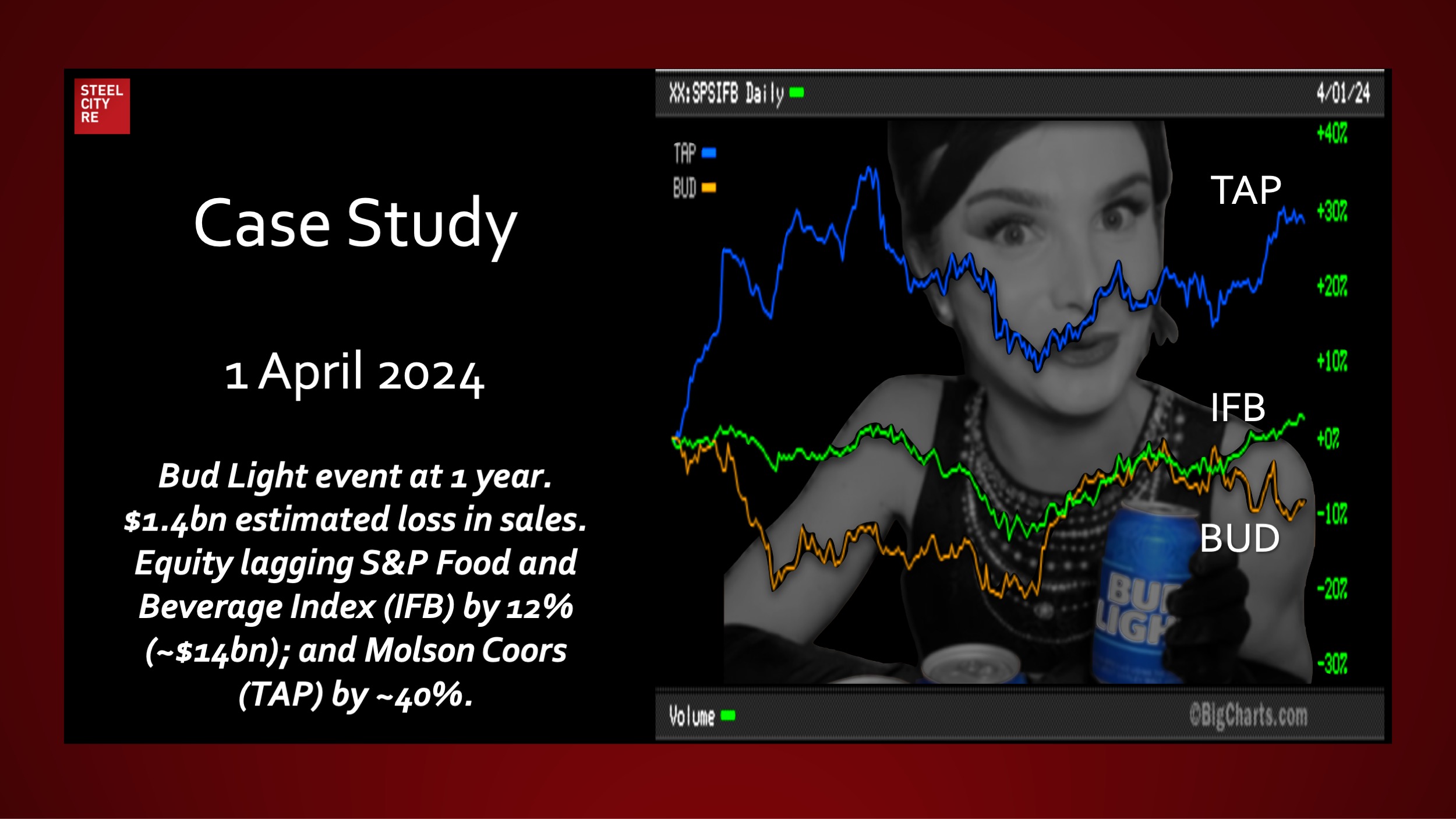
The issue at Campbell's is neither one of compliance nor enterprise risk management, but rather one of reputation risk governance. The question is therefore how did reputation resilience become so impaired that that one-year old stupid comment by an allegedly impaired senior executive, then into his 5th month of employment, exposed weak governance, reputation risk management, and reputation crisis management?

The issue at Campbell’s is neither one of compliance nor enterprise risk management, but rather one of reputation risk governance. The question is therefore how did reputation resilience become so impaired that that one-year old stupid comment by an allegedly impaired senior executive, then into his 5th month of employment, exposed weak governance, reputation risk management, and reputation crisis management?

November 17, 2025

Empirical Evidence: Reputation Risk Disclosure Boosts Equity Returns

Risk governance disclosures boosted equity value relative to peers at 1, 28, 56, and 84 days by averages of 0.3%, 5.6%, 3.7% and 4.1%.

October 23, 2025

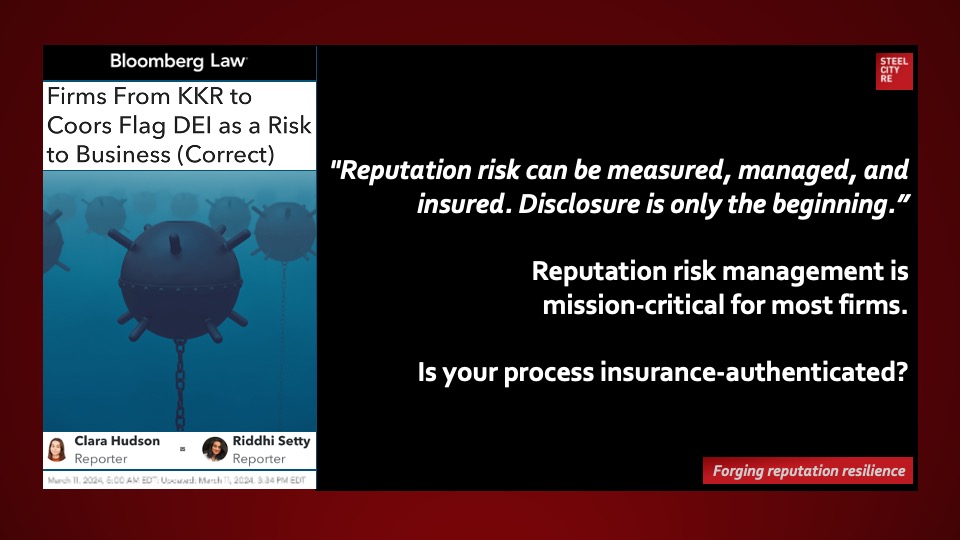
Reputation risk is a threat to resilience

The shifting landscape of social and cultural norms have made reputation risk—which threatens liquidity—more prevalent, costly to firms, and personal to corporate leadership. Risk professionals are now describing reputation risk as a threat to resilience rather than a PR problem. Communications executives are using new reputation risk governance and management intelligence tools, and both the American Law Institute and the DCRO Risk Governance Institute are recommending reputation insurance for companies and their boards.

September 11, 2025

Good governance does not shield directors from liability risk nor reputation risk. The former is the hard lesson learned by everyone in the mid 1980’s; the latter is being learned now. The reputations of board members have increasingly become targets in a time of heightened activism and social media activity. Read the article in Directors & Boards to learn what experts say directors should do.

September 10, 2025

Personal attacks on directors are now a governance weapon

Personal attacks on directors are now a governance weapon – amplified by activists, media, and social platforms. Traditional protections (proxy advisors, board slates, collegiality) are eroding. Reputational harm can drive board turnover, litigation, and long-term career damage. Emerging responses: (1) Hazard pay for directors; (2) Reputation insurance alongside D&O coverage. Oversight of reputational risk is mission-critical. Boards must exercise foresight: how is reputational risk being integrated into risk management, who is responsible, and how is the company mitigating it?

August 16, 2025

Insurance for reputation: risk is a misalignment between what a company does and says to which stakeholders respond financially." 

“In practical terms, reputation risk reflects the misalignment between what a company does and says, what various stakeholders expect and how they respond in financially relevant ways.  The choices and response of those stakeholders — buying, investing, advocating, protesting, regulating, criticizing or leaving — carry consequences for a business and its operating environment, and sometimes entire industries. These are the under appreciated and tangible costs of reputation risks worth considering with more ongoing foresight”…and financial solutions like reputation insurance and board-level Side R protections.

August 4, 2025

Mission-critical risks have become intertwined with boards' fiduciary duties … reputation can be a mission-critical risk for many companies, according to Nir Kossovsky, CEO of Steel City Re

Facebook recognized the reputational risk associated with its users’ privacy, and the shareholders homed in on this in their lawsuit. […] “Facebook is in the business of collecting user data, and if its reputation is damaged such that users lose their trust, it has the potential to damage the company’s and its investors’ long-term interest beyond the fines and penalties already paid” […] Mission-critical risks have become intertwined with boards’ fiduciary duties … reputation can be a mission-critical risk for many companies, according to Nir Kossovsky, CEO of Steel City Re, an insurance provider for reputational risk.

June 26, 2025

Reputation risk management and governance with insurance is now a best practice recommended by governance and legal authorities.

Reputation risk management and governance with insurance is now a best practice recommended by governance and legal authorities.

Sophisticated prospective/captive owners intent on launching a captive, or jumpstarting an expanded remit for an existing captive, may successfully overcome corporate inertia with a parametric cover for reputation risk. Reputation insurance is now a recommended best practice—Principle #9—for Reputation Risk Governance according to recently released landmark guidelines from the DCRO Institute. Reputation insurance and insurers are also recognized for their value in reducing compliance risk in America Law Institute’s March 2025 release of Principles of the Law, Compliance and Enforcement for Organizations.