April 20, 2024
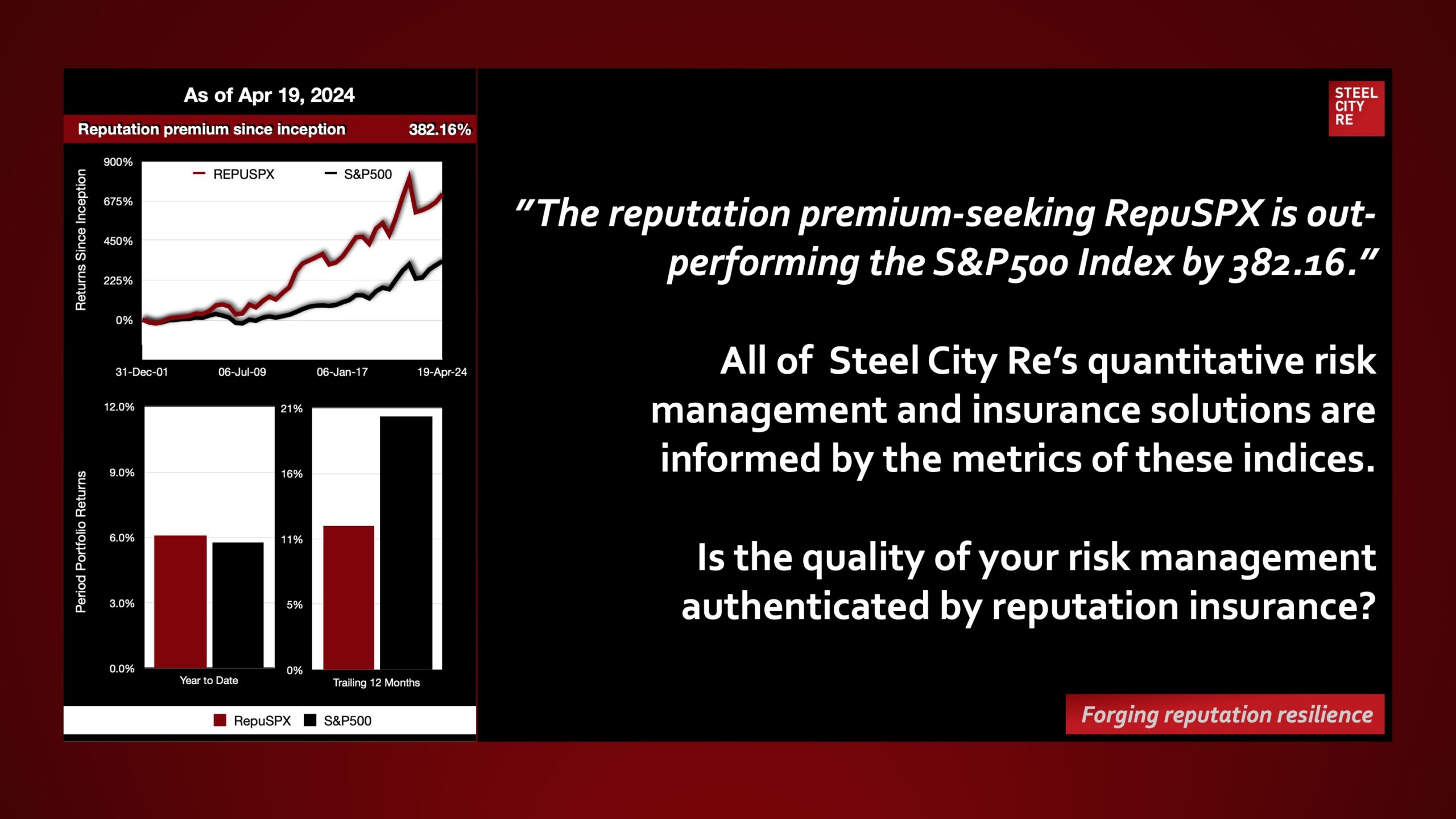
Reputation arbitrage premium: The reputation premium-seeking RepuSPX is out-performing the S&P500 Index by 382.16%

Reputation arbitrage premium: The reputation premium-seeking RepuSPX is out-performing the S&P500 Index by 382.16%

“Unsavory” may be forgiven, if not forgotten. Speculation aside, objectively, none of Steel City Re’s reputation risk measures indicated a problem with MSGE. The obvious benefit of such objective metrics is that it protects CEOs’ reputation-linked compensation and shields boards from attacks. Is your reputation risk management process insurance-authenticated?
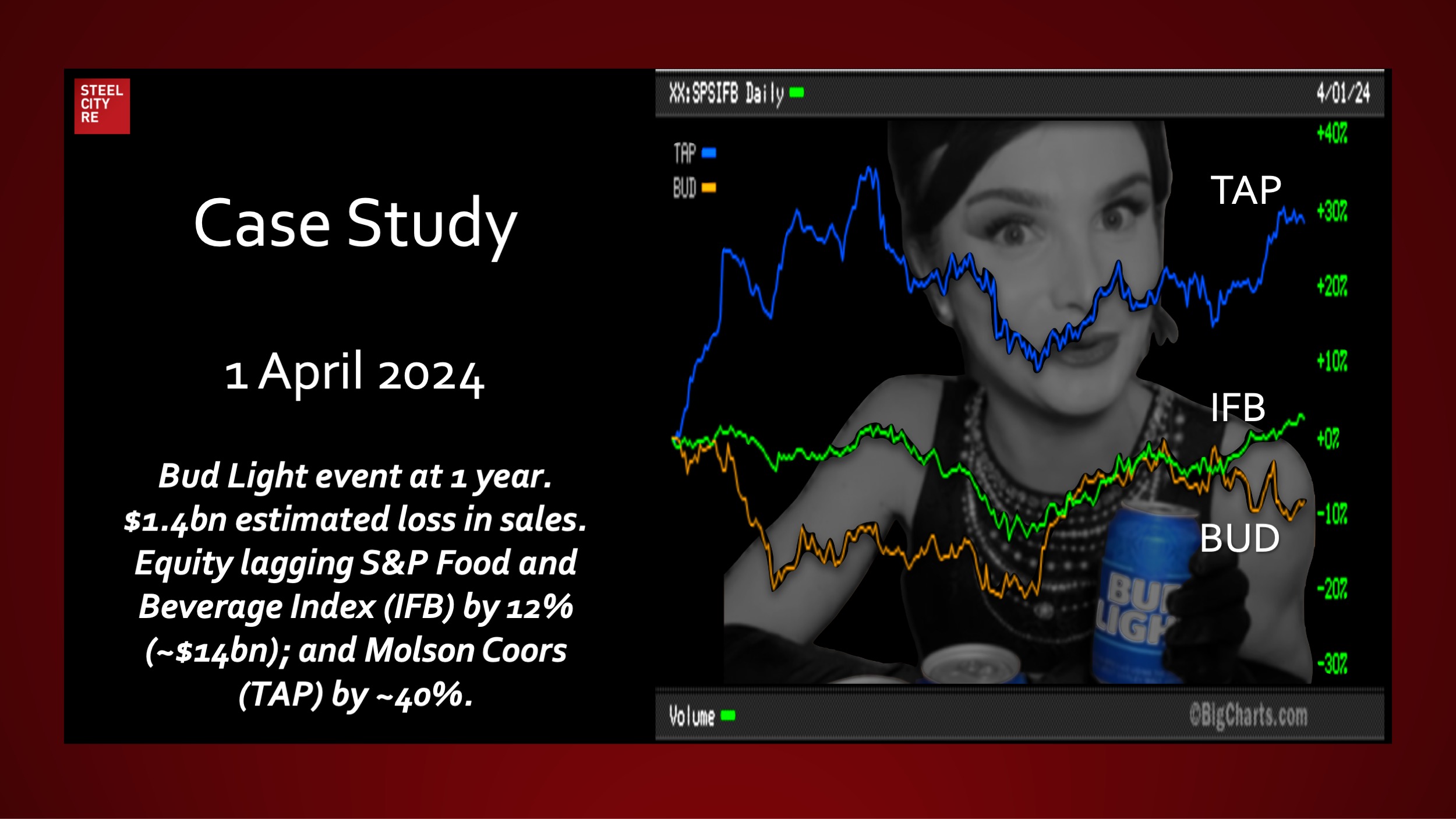
Bud Light reputation crisis at one year. $1.4bn estimated loss in sales. Equity lagging S&P Food and Beverage Index (IFB) by 12% (~$14bn); and Molson Coors (TAP) by ~40%.
With reputation risk forecasting, management, and insurance, Steel City Re helps companies build and prove to stakeholders their thoughtful risk management and dutiful governance over all that is mission-critical. It is an authenticated story stakeholders can appreciate and value.
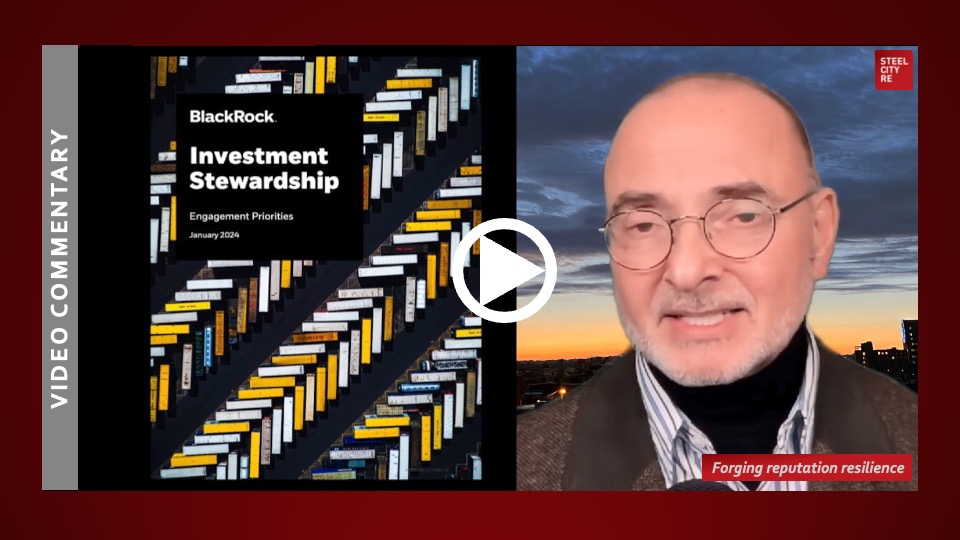
$5 trillion worth of shareholder votes want more ERM this year. The investment stewardship team at Blackrock, the world’s largest asset manager, will put “increased focus on how companies are strengthening financial resilience.” It is a is a challenge Steel City Re has been anticipating since 2007.
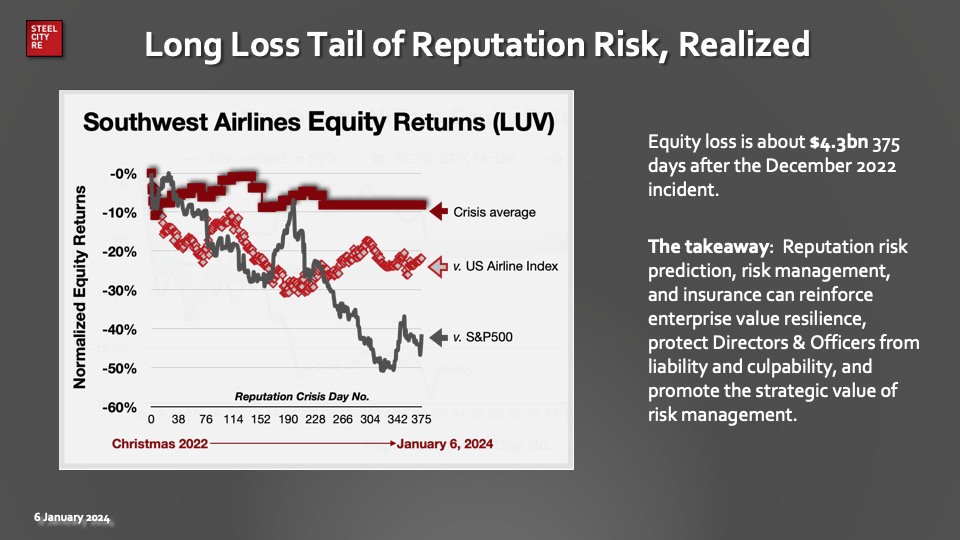
Southwest Airlines reputation crisis. At crisis day 375, Southwest equity is under performing the S&P500 index by 41.4%. Steel City Re’ Resilience Monitor warned that an operational failure was likely to trigger a reputation crisis.
![Reputational risk from $1.5 Trillion ESG debt. Bankers servicing one of the world’s biggest ESG debt markets are now actively seeking legal protections to guard against the potential greenwashing allegations that may be ahead. […] Lawyers advising SLL bankers say the reputational risks associated with mislabeling such products are now too big to ignore.](https://steelcityre.com/wp-content/uploads/2023/11/20231107-Steel-City-Re.jpg)
Reputational risk from $1.5 Trillion ESG debt. Bankers servicing one of the world’s biggest ESG debt markets are now actively seeking legal protections to guard against the potential greenwashing allegations that may be ahead. […] Lawyers advising SLL bankers say the reputational risks associated with mislabeling such products are now too big to ignore.
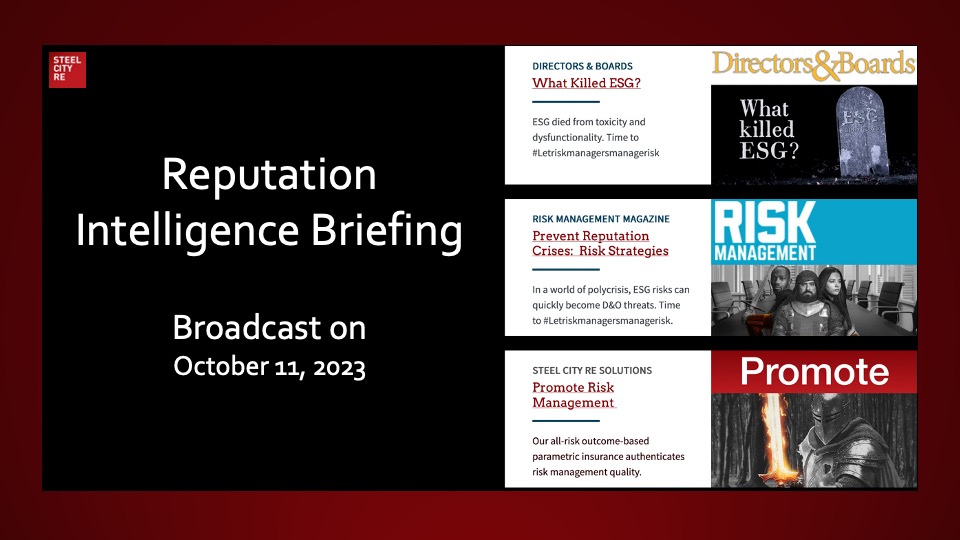
Steel City Re CEO and former Los Angeles County deputy coroner on what derailed the ESG movement & what boards expect from risk management in the aftermath.
![A CEO and former Los Angeles County deputy coroner on what he feels derailed the ESG movement […] ESG died from toxicity and dysfunctionality. Culpable parties include investors, fund managers, corporate communicators and politicians.](https://steelcityre.com/wp-content/uploads/2023/10/20231006-Steel-City-Re.jpg)
A CEO and former Los Angeles County deputy coroner on what he feels derailed the ESG movement […] ESG died from toxicity and dysfunctionality. Culpable parties include investors, fund managers, corporate communicators and politicians.
![In a world of polycrisis, […] risk managers need to… market the elevated quality of their risk management processes.](https://steelcityre.com/wp-content/uploads/2023/09/20230926-Steel-City-Re.jpg)
In a world of polycrisis, […] risk managers need to… market the elevated quality of their risk management processes. The author thanks for their contributions to this article:
Courtney Davis Curtis, University of Chicago; Deyna Feng, Cummins, Inc.; Mary C. Friedl, Redbox; Kathleen A. Graham, The HQ Companies; Chris Hammond, Stepan; Enya He, Blu Clarity PBC; Carnell R. Jones, Trinitas Ventures; Christy Kaufman, Zillow Group; John C. Kline, Discover Financial Services; Manuel Padilla, MacAndrews & Forbes Incorporated; Soubhagya Parija, FirstEnergy and New York Power Authority; Kristen Peed, CBIZ; Theresa Severson, Kite Realty Group; Seung Yoo, Regal Rexnord Corporation; and Denise Williamee, Steel City Re.
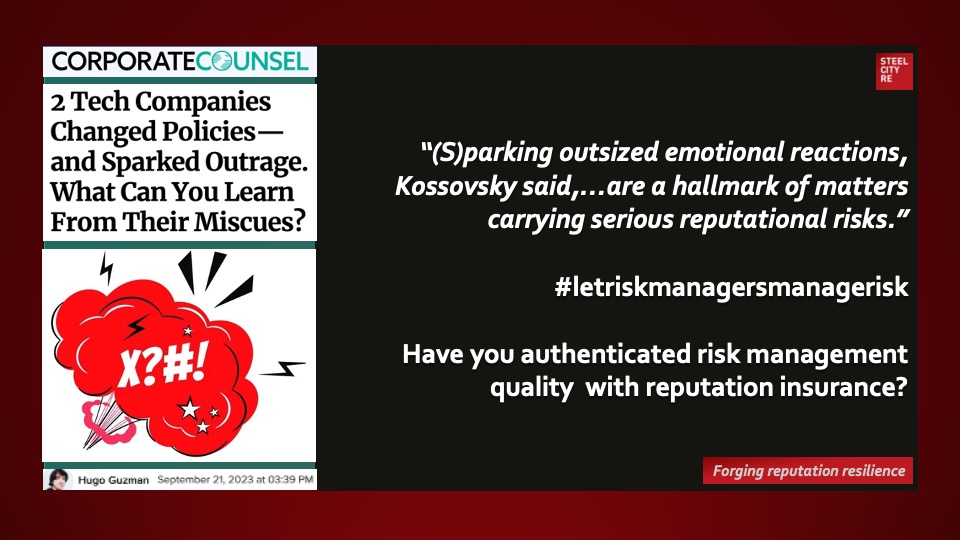
Tech companies changed policies. “(S)parking outsized emotional reactions, Kossovsky said,…are a hallmark of matters carrying serious reputational risks.”